



Villages echoe with shuttles
After a long harworking day in rice paddy field, Mrs. Quàng Thị Hương from Pá Khoang Commune (Điện Biên Phủ City) changes out of her sweat-soaked work clothes and hurriedly prepares lunch for her family. Once her family takes an afternoon nap, she continues weaving an unfinished fabric.
Mrs. Hương shared that weaving is when she feels the happiest and most relaxed. It allows her to set aside the busyness and worries of life, fully immersing herself in her passion and creativity to craft the most beautiful brocade fabrics. The weaving tools and shuttles she uses have been passed down from her grandmother and mother, nearly a hundred years old, yet they remain durable over time.
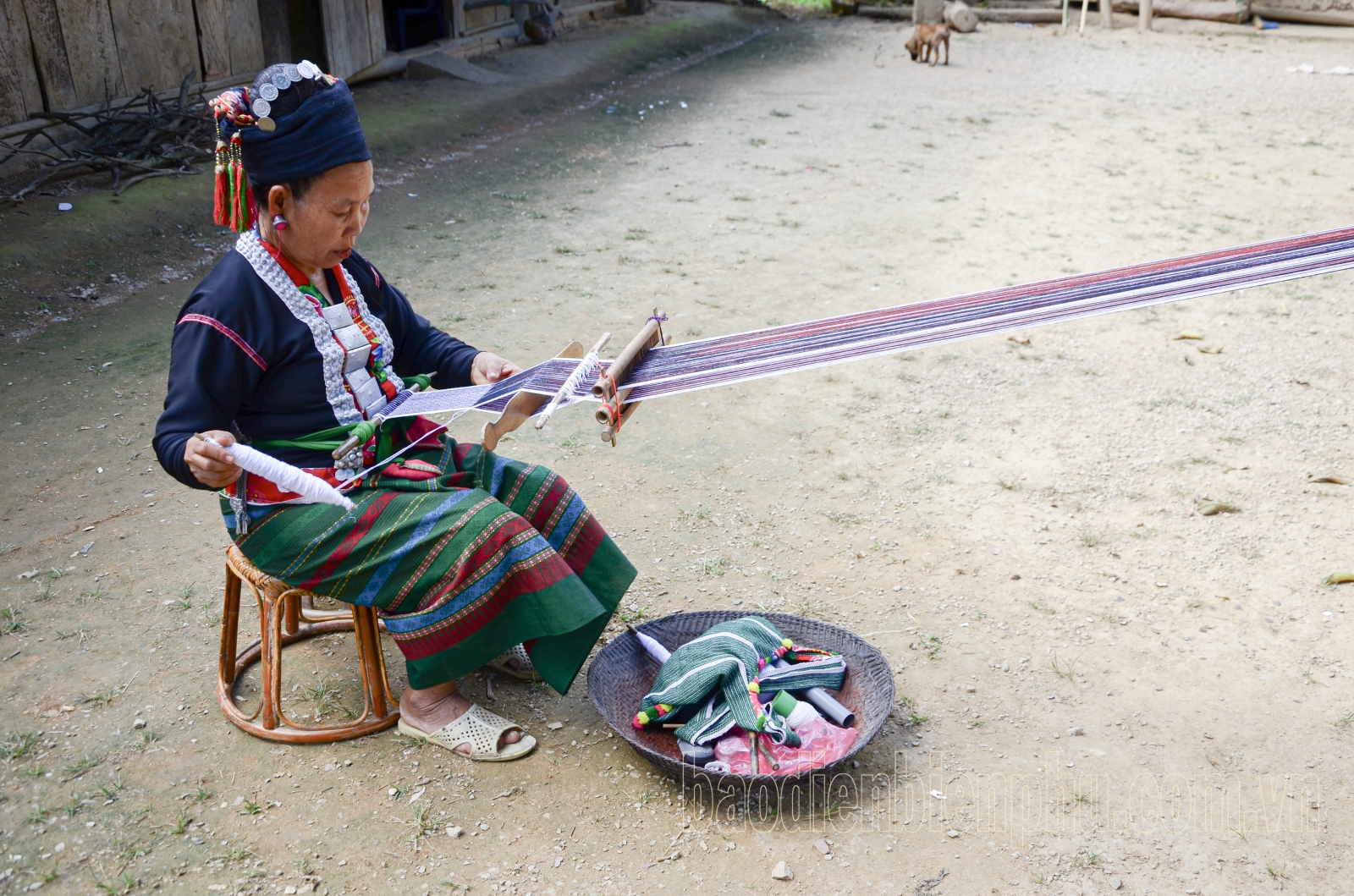
Many Khơ Mú women continue to maintain the weaving tradition today.
“Although cotton farming for weaving, as practiced by previous generations, has largely disappeared, many Khơ Mú women still preserve the art of embroidery and weaving. Without homegrown cotton, we buy threads. We may not weave regularly, but whenever there is free time, we work on it. During festivals and holidays, we wear traditional costumes, so we must keep the craft alive to serve demands of our families. This is also a way to preserve our cultural identity,” she added.
Unlike some other ethnic minority groups, the Khơ Mú’s weaving tools are made of simple wood. They do by hands without using their feet or sitting at a fixed loom.
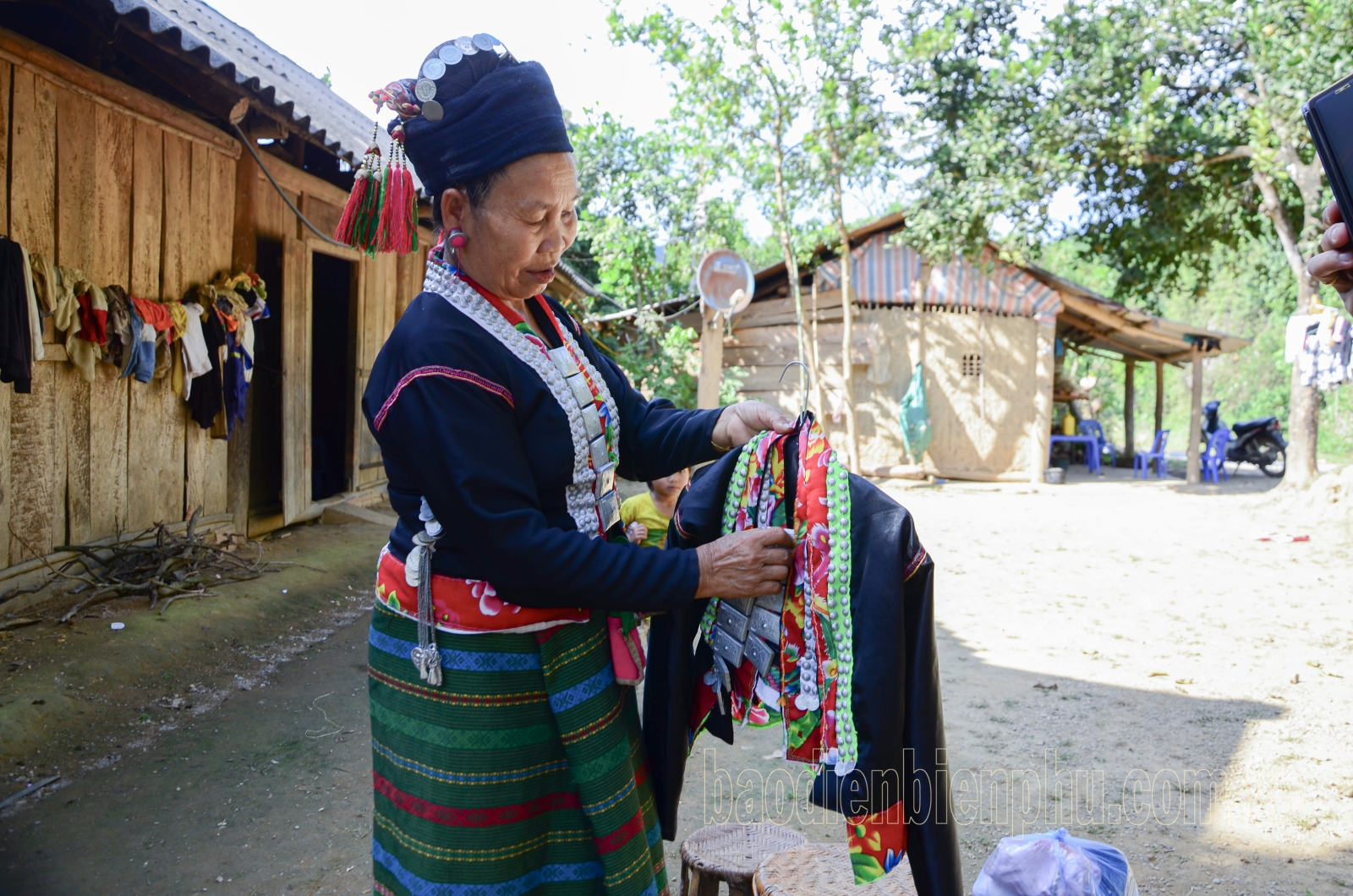
Traditional costumes are crafted through skilled hands of Khơ Mú women.
“We don’t have fixed looms,” said Mrs. Quàng Thị Vừ from Tọ Cuông Village, Ẳng Tở Commune, Mường Ảng District. “We weave by tying white threads together and securing them to a convenient spot. The other end is tied to a fabric belt wrapped around the weaver’s waist. The shuttle interlaces colorful threads to create patterns. Each fabric piece is about 20-30 centimeters wide, mainly used to make scarves, sleeves, skirts, or bags.”
In Na Sang 2 Village, Núa Ngam Commune (Điện Biên District), Lào women are striving to preserve weaving tradition by establishing a cooperative with nearly 20 regular members. They support each other in production and work together to find stable markets for their products.
Beyond the cooperative model, many Lào families continue to weave during their downtime from farming. If there is a need to sell the products, the cooperative will purchase them at a guaranteed price. Determined not to let the craft fade, Mrs. Lường Thị Un, over 60 years old, diligently teaches her children and grandchildren every day.
“Lào people grow up with the sound of shuttles,” Un said. “We regard weaving as a measure of a woman’s skill and virtue. That is why many generations of Lào women are skilled weavers. For me, weaving is a symbol of love and national pride, so I feel a responsibility to pass it down to my future generations.”
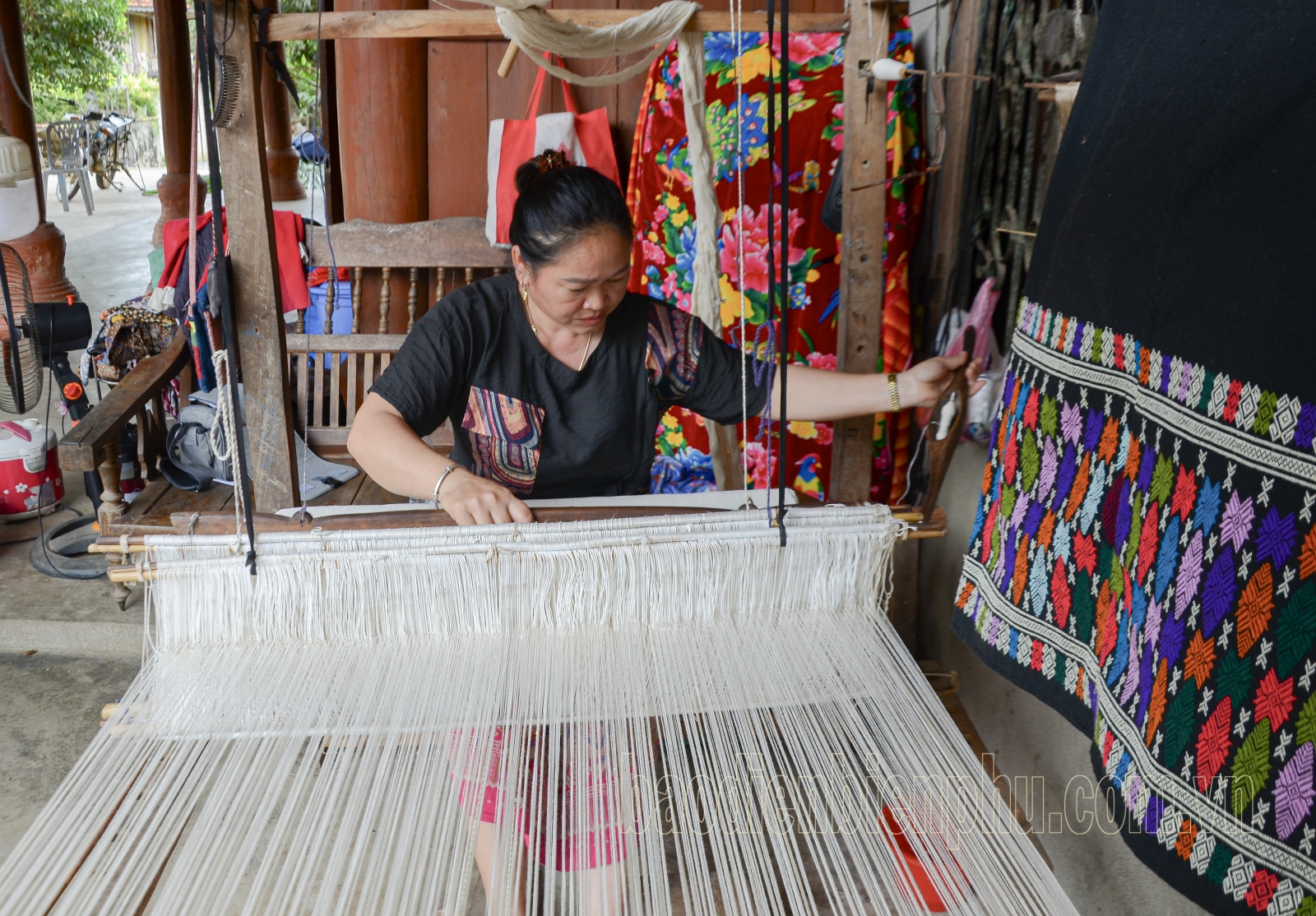
A Lào women in Na Sang 2 Village, Núa Ngam Commune, is diligent at their loom.
Efforts to pass down the craft
Recently, Điện Biên Province has organized various activities to support and honor ethnic minority groups in recognizing the cultural and economic value of brocades. Through different funding sources, the province has opened training courses to teach and pass down the craft to younger generations.
In 2024, Điện Biên Province implemented Project No.6 on “Preserving and promoting the sound traditional cultural values of ethnic minority groups in connection with tourism development” under the national target program for socio-economic development in ethnic and mountainous areas from 2021 to 2030. The project includes practical and effective activities.
Under this project, the Điện Biên Province’s Museum, in association with district-level cultural and media centers, has conducted various training courses on traditional costume making for ethnic minority groups such as Kháng, Si La, Sán Chay (Sán Chỉ subgroup), and Khơ Mú.
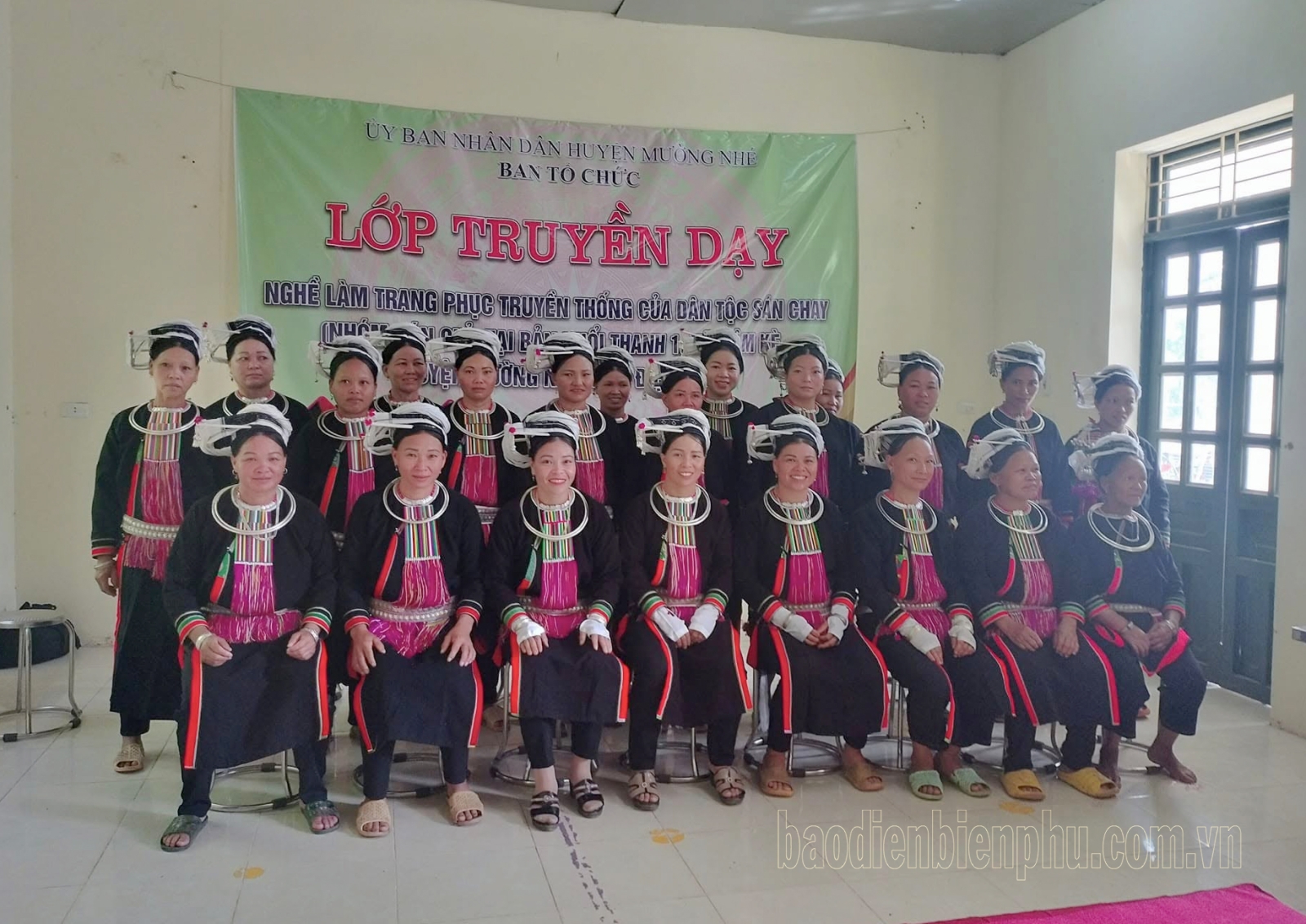
A training course on traditional costume making for Sán Chỉ women in Huổi Thanh Village, Nậm Kè Commune, Mường Nhé District.
Mr. Đặng Trọng Hà, Director of the Điện Biên Province’s Museum, indicated that these training courses help ethnic communities raise their awareness of and responsibility in practicing and passing down the methods, techniques, and processes of making traditional costumes. They also create a generational connection and promote the roles and responsibilities of related units and individuals in preserving the craft. This contributes to preserving and promoting traditional cultural values within local ethnic communities.
Adopting the principle of “Don't give a man a fish, teach him how to fish,” many localities in Điện Biện Province have applied this approach to preserve and promote ethnic minority groups’ costume making crafts. Traditional costume preservation in combination with the new-styled rural area building program equip ethnic minority groups with knowledge and skills to actively develop and preserve their own cultural identities. These activities also contribute to community-based tourism development, providing local income and promoting sustainable socio-economic development.
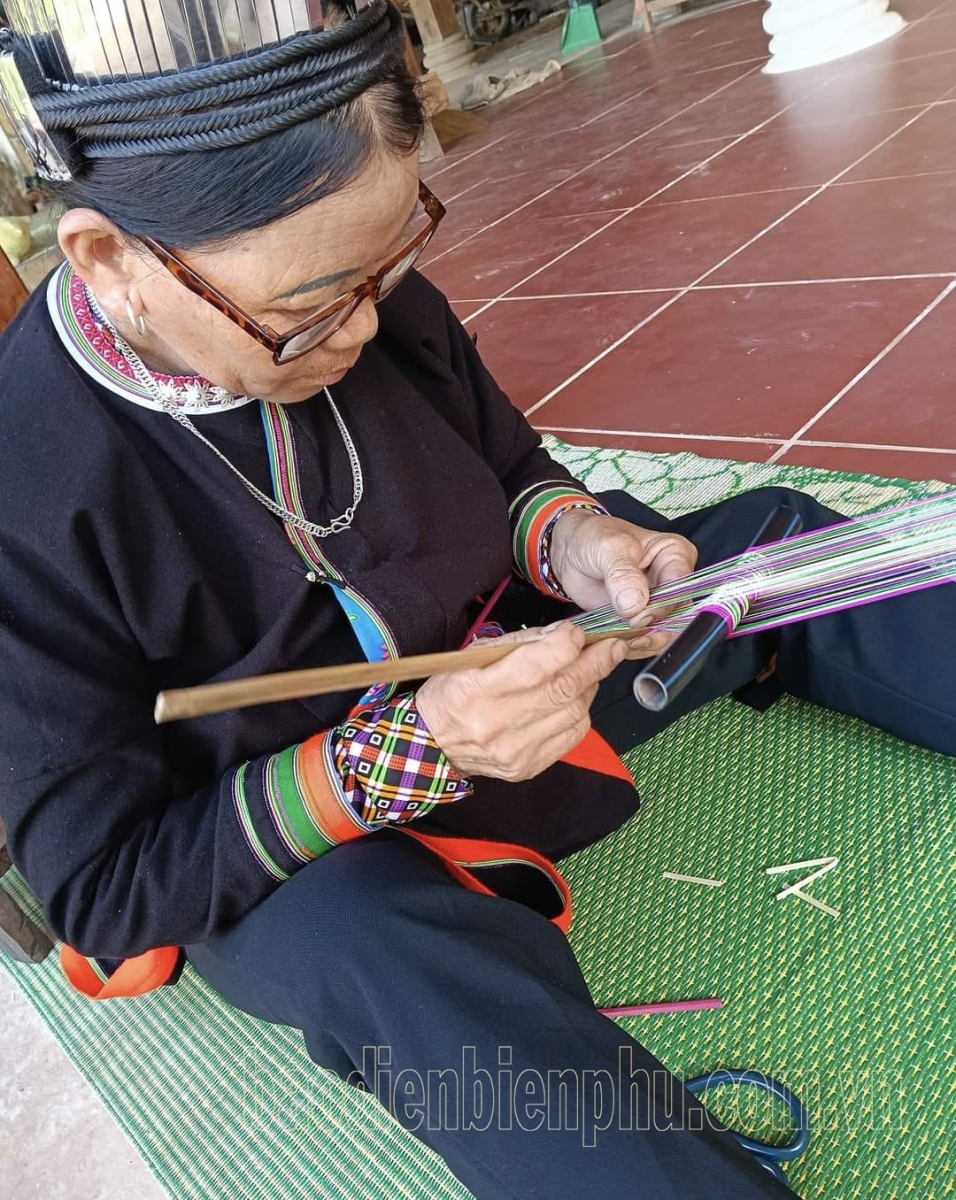
Sán Chỉ women diligently weave fabric. Photo: Freelancer
Some ethnic minority areas are developing community-based tourism through homestay model. It provides visitors with deeper insights into local customs and practices. Traditional houses are renovated with modern amenities to meet tourists’ lodging demands. In addition to culinary offerings and cultural and artistic products, experiencing traditional crafts, including weaving, is given special priority. Some culturally rich and tourism-potential villages include: Phiêng Lơi, Che Căn, Kéo (Điện Biên Phủ City); Tả Kố Khừ (Mường Nhé District); Nà Sự (Nậm Pồ District); and Na Sang II (Điện Biên District).
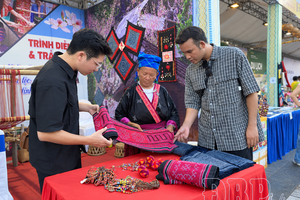
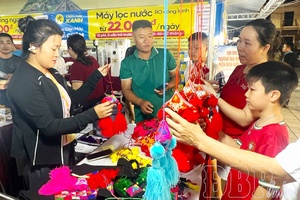
In fact, witnessing firsthand the intricate techniques of manual weaving and embroidery, and admiring the simple yet sophisticated patterns crafted by the indigenous people, offers tourists a fascinating experience. Many places also offer traditional costume rentals for photoshoots and souvenirs, generating income for local population while contributing to preserving and popularizing the province’s cultural heritage.
Hải Yến
.jpg)
.jpg)
.jpg)
.jpg)

.jpg)
.jpg)
.jpg)

.jpg)
.jpg)
.jpg)
You have 500/500 characters left
Please enter 5 or more characters!!!